Two Fezzes, One Brotherhood: Reviving Freemasonry Through Unity
- trevor3861
- May 17, 2025
- 7 min read
Introduction: A Fez of a Different Colour
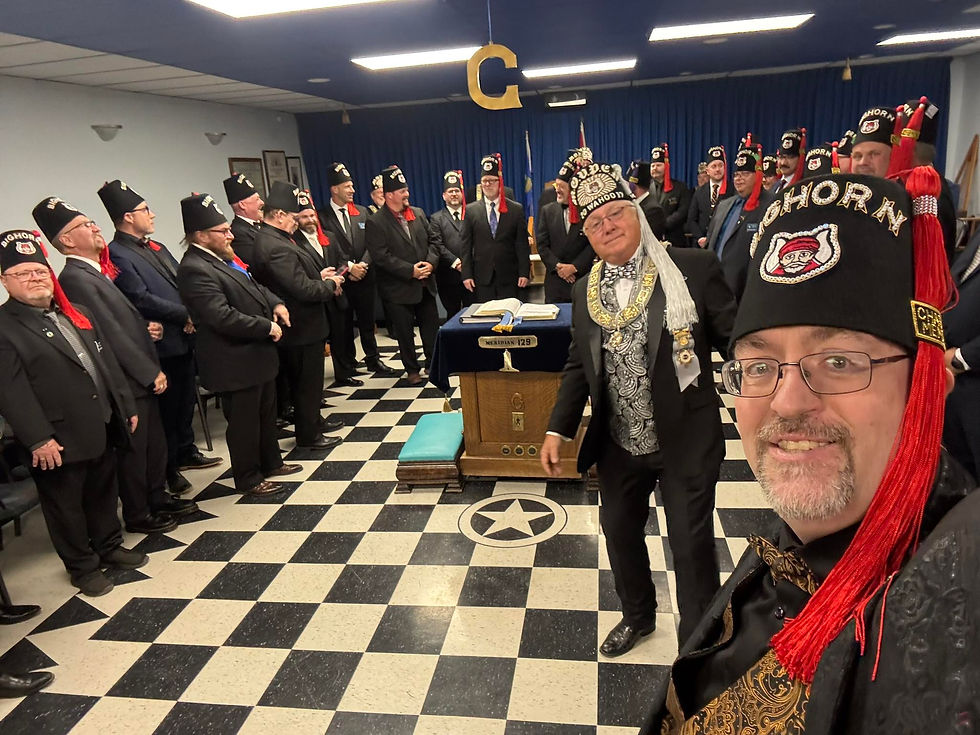
On a crisp May evening, in a hall filled with laughter, ritual, and the rhythmic clink of toasting glasses, something historic happened: Bighorn Grotto was consecrated in Alberta.
I had the honour of being one of its charter members.
To some, this may have seemed like a curious move. After all, I’m not just a Mason—I serve on the Divan of Al Shamal Shriners. My calendar is packed with Shrine events, my heart is in our mission, and I’ve worn the red fez proudly for years.
So why add a black fez to the mix?
The answer is simple: this was not a departure from the Shrine—it was a deeper commitment to it. Joining the Grotto wasn’t about choosing sides; it was about building bridges. And if we are serious about reviving the heartbeat of Freemasonry in Alberta, we need more bridges, not more silos.
This is a story about fezzes—but more importantly, it’s a story about vision, courage, and the future of our Craft.
The Grotto: Mirth, Mystery, and Masonic Legacy
The Mystic Order of Veiled Prophets of the Enchanted Realm—known more commonly as the Grotto—is a Masonic body that traces its origins to the late 19th century. It was formed not to add complexity to Freemasonry, but to add depth, warmth, and joy to it.
“I am now proud to be a Man of Two Fezzes—one red, one black—both worn in the spirit of Brotherhood.”
The Grotto is about fellowship with flair, embracing the mystical and humorous side of the Craft while reinforcing the sacred bond of brotherhood. It complements—not competes with—Blue Lodge Masonry, much like the Shrine.
In many ways, the Grotto is the spiritual cousin of the Shrine. Both are rooted in the idea that joy and service are not mutually exclusive. Both emphasize ritual, community, and deeper bonds of fraternity. And both have long been misunderstood—occasionally even by their own.
So when the opportunity came to help found Bighorn Grotto, I saw not a conflict, but a calling. Not a fork in the road—but a new path that connects.
Why I Joined: A Strategic Act of Unity

There’s no denying it: in our province—and across North America—Freemasonry is facing a moment of reckoning. Shrinking memberships, competing priorities, and a modern world that rarely stops to breathe all create challenges for our Craft.
But I don’t believe we’re in decline. I believe we’re in transition.
To meet that transition with strength, we need more than just preservation—we need integration. And that means actively building relationships between Masonic bodies. It means participating, understanding, and collaborating—not retreating into camps or cliques.
As a member of the Al Shamal Divan, I believe I have a responsibility not only to serve the Shrine but to model the kind of leadership we want others to follow. So I joined the Grotto to help lead by example.
I wanted to say publicly, 'The future is fraternal—not fractional.'
EMVP in Action: A Framework for the Future

“Fellowship is not a frivolous add-on to Freemasonry. It is its heartbeat.”
My work with the Shrine has been guided by four pillars—Energy, Mentorship, Visibility, and Purpose (EMVP). The experience of joining Bighorn Grotto affirmed just how vital that framework is—not just for the Shrine, but for the whole of Freemasonry in Alberta.
𝗘𝗡𝗘𝗥𝗚𝗬
The Grotto brings a unique, joyful energy into the room. The degree is immersive, playful, and moving. The camaraderie is instant. The laughter is genuine. The ceremony reminds us that we are not just men with titles—we are Brothers seeking connection.
𝗠𝗘𝗡𝗧𝗢𝗥𝗦𝗛𝗜𝗣
When senior members of the Craft step forward to build bridges across organizations, it sends a message: We’re not too proud to learn. We’re not too comfortable to evolve.
𝗩𝗜𝗦𝗜𝗕𝗜𝗟𝗜𝗧𝗬
The consecration of Bighorn Grotto attracted guests from across Canada and the United States. This level of cross-body engagement is the kind of visibility we need more of—not just public visibility, but internal, Masonic visibility.
𝗣𝗨𝗥𝗣𝗢𝗦𝗘
There is an outdated fear that joining another Masonic body means weakening your commitment to the Shrine or Lodge. That fear is not just unhelpful—it’s harmful. Joining the Grotto does not distract from the mission of the Shrine. It reinforces it.
Answering the Charge: A Master Mason’s Duty in Action

Some may view my decision to join the Grotto while serving on the Divan of Al Shamal as a symbolic act of unity. Others may see it as a calculated move to broaden connections across the Masonic landscape. But to me, at its core, this was simply a matter of duty—a direct, intentional response to the obligations I accepted when I became a Master Mason.
Every Master Mason is given a charge—words spoken not just as ceremony, but as a compass for our Masonic lives. They call us to guard the Craft, to mentor others, to inculcate universal benevolence, and to set the example in thought, word, and deed. In choosing to become a charter member of Bighorn Grotto, I was not departing from that Charge—I was living it.
Fellowship is not a frivolous add-on to Freemasonry. It is its heartbeat. The Grotto brings a joy-infused form of engagement that improves the morale, civility, and connection of our Brethren. By supporting it, I’m helping to shape spaces where Masons can renew their spirit, reconnect with each other, and become better men in the process.
Our example must speak louder than our titles. In joining the Grotto while wearing the red fez of the Shrine, I am showing younger Brethren—and perhaps even some seasoned ones—that unity is not a threat. It is our greatest strength.
"Unity is not a threat. It is our greatest strength."
“This collaboration is not a novelty—it is a necessary evolution.”
I joined not to stir controversy or to chase novelty. I joined because my duty to Freemasonry demanded it. Our province, like much of the world, needs Masons who are not content with silos and decline—but who will build bridges and rekindle connection. By uniting the red and black fez, I hoped to demonstrate that duty isn’t just about preserving the past—it’s about preparing the future.
The Alberta Opportunity: A New Chapter in Fraternal Leadership

Alberta has always been a stronghold for Freemasonry, but like many provinces, we are facing generational gaps and retention challenges. What happened with Bighorn Grotto offers a blueprint for how we can respond.
Cross-body collaboration is not optional—it’s essential. Leaders must step forward and set the tone. Mirth, ritual, and relevance must walk hand in hand.
The momentum we felt that evening was not just from new Prophets—it was from a renewed sense of what Freemasonry could be when we work together.
If we want the Shrine to thrive, we must stop acting like it exists on an island. It is one part of a beautiful, evolving network of traditions—and when that network is strong, every branch grows.
A Message to My Fellow Nobles

To my Brothers in the Shrine: if you felt surprised by my decision to join the Grotto, I understand. Tradition can feel threatened by change. But I ask you this: what greater tradition is there than Masonic unity?
Our ritual teaches us to recognize the Light in others. Our mission calls us to serve—not just hospitals, but humanity. Our strength lies in our adaptability, our compassion, and our willingness to lead in uncertain times.
"Our strength lies in our adaptability, our compassion, and our willingness to lead in uncertain times."
I joined the Grotto to affirm that belief.
This is not a competition. It is a conversation. And it’s one I hope we will continue to have—not just with each other, but with every new Mason looking for meaning in our organizations.
Conclusion: The Fez Is Just the Beginning
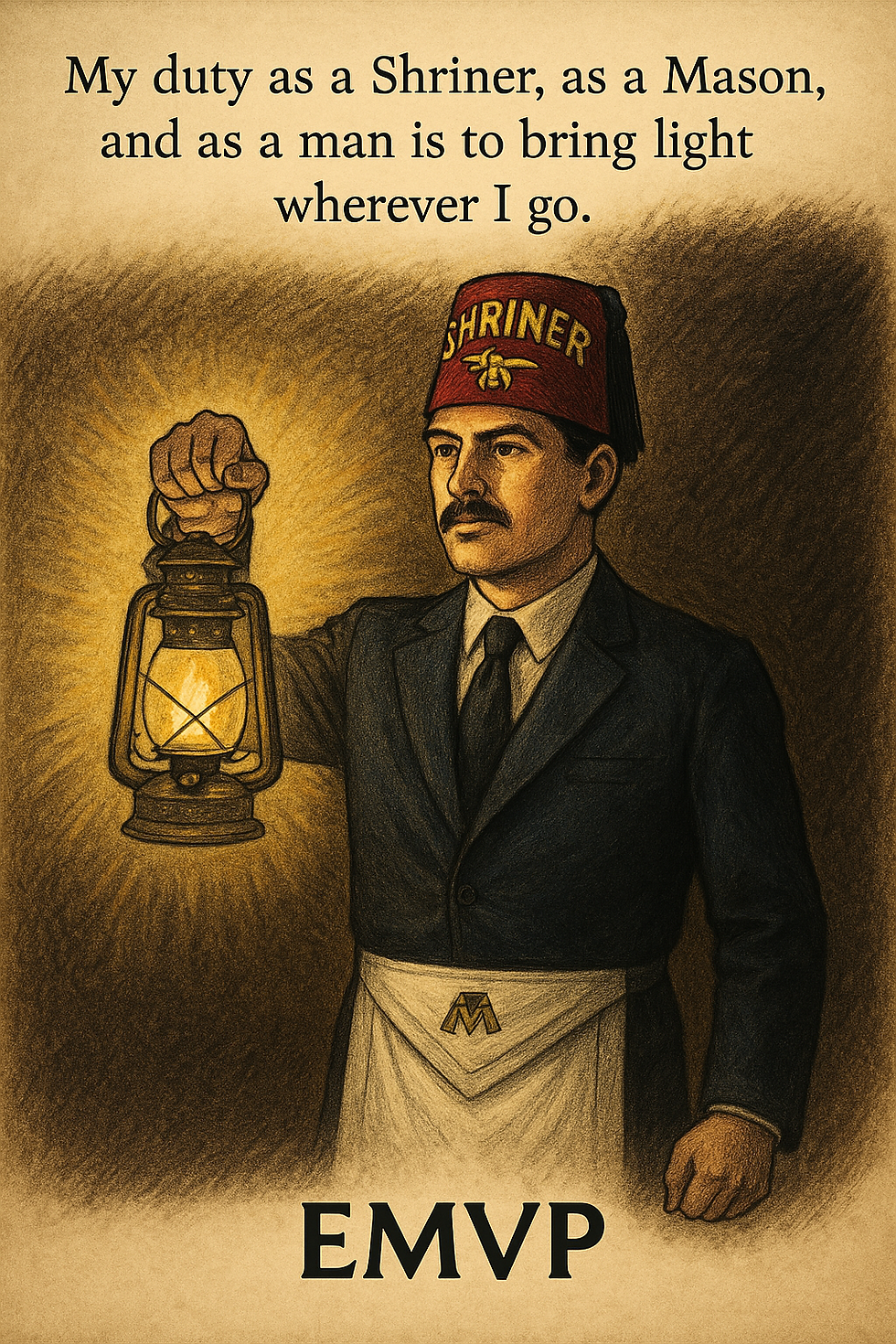
The black fez I received at the Bighorn Grotto consecration is not a symbol of separation. It is a reminder—that my duty as a Shriner, as a Mason, and as a man is to bring light wherever I go.
"My duty as a Shriner, as a Mason, and as a man is to bring light wherever I go."
That duty didn’t change when I joined the Grotto. If anything, it deepened.
"To all my Brothers across Alberta—regardless of the colour of your apron, fez, or collar—know this: I am proud to stand beside you. I am proud to serve. And I am committed to building a future where Energy, Mentorship, Visibility, and Purpose guide everything we do."
Let us continue to build bridges—not walls.
Let us keep the spirit strong.
Fezzes. Fellowship. Purpose.
Reflective Questions for Applying the EMVP Framework
For Shriners
· • How can we better collaborate with other Masonic bodies to amplify our mission of service?
· • Are we creating enough joyful, energizing experiences for our members?
· • How are we mentoring new Nobles beyond their ceremonial initiation?
· • What visible presence do we have in our community—and how can it be strengthened with others?
· • Does our current calendar reflect both purpose and connection?
For Newly Initiated Members of Bighorn Grotto
· • How can we carry the spirit of mirth into meaningful engagement with our Brothers?
· • What role can each of us play in mentoring others into the Grotto experience?
· • How can we support the visibility and mission of the Shrine while honoring our own identity?
· • What does 'purpose' look like within our rituals and gatherings?
· • How can we ensure the black fez represents unity, not division?
For All Freemasons
· • Am I living my Master Mason’s Charge in both my Lodge and beyond it?
· • Do I see other Masonic bodies as allies—or as something separate from my own journey?
· • How am I helping to bridge generational and jurisdictional gaps in our Craft?
· • What does mentorship look like in my Lodge—and how can I improve it?
· • Am I contributing to a vision of Freemasonry that is united, purposeful, and relevant?


Comments