🔥 Standing Inside the Fire
- trevor3861
- Jun 6, 2025
- 9 min read
A Return to Fort McMurray—and the Leadership Lessons I Never Expected.
What Garth Brooks, old schools, and the EMVP framework taught me about trauma, resilience, and purpose.
By Trevor Eliott | Mr. Fancy Fez
🛤️ The Road Back
Most people see the exterior — the guy who keeps showing up, who leads from the front, who takes the hits and keeps moving. What they don’t always see is the cost of that resilience. Or where it was forged.
For me, it began in places I once swore I’d never return to.
This month, I went back to Fort McMurray for the first time in nearly 40 years. On paper, it was a leadership visit—part of my role as Divan Liaison for the Shriners, supporting a key regional event and connecting with the Fort McMurray Shrine Club. But beneath the surface, it became something deeper. More personal. More necessary.
It became a journey into the heart of old wounds—not to relive them, but to reckon with them.
Technically, it was my second time back. Earlier this month, I came up by bus, checked into the hotel, met with the Nobles, and left the next morning. I never stepped outside long enough to breathe. No reflection. No wandering. No memory work. I was there in body—but not in spirit.
This time was different.
I walked the streets. I stood in front of old schools. I visited the church I once thought might help make me whole. I traced the edges of the places where my life first cracked open—and where, without knowing it, the slow work of healing had begun.
And through it all, one lyric kept echoing in my head:
“Life is not tried, it is merely survived if you're standing outside the fire.” — Garth Brooks
This trip wasn’t about surviving. It wasn’t about looking back from a distance. It was about stepping back into the fire—not to be burned again, but to reclaim the heat that shaped me.
Because leadership doesn’t begin at the podium. It begins in the places we least want to revisit—when we choose to face what once fractured us, and walk forward anyway.
🏫 Three Schools, One Story
The first stop on this journey was Dr. K. A. Clark School, just across the street from my hotel. It’s surreal—walking past the same playground I ran through in Grade 3, chasing some sense of normalcy. This time, I was chasing something else entirely: meaning.

I smiled when I remembered Katrina chasing me around the monkey bars. I didn’t know back then she was probably flirting. I was clueless. All I knew was to run.
Now, I get the joke. And I smile differently—knowing I ended up with the only girl I’ll ever need: Julia. ❤️

Then I walked over to where the little church used to stand, just across from our old apartment. It’s now the Redeemed Christian Church of God 🙏, but back then, it’s where I went to Sunday school.
Not because of faith. But because that’s where my friends went. And at eight years old, belonging felt like salvation.

But that wasn’t the end of my Sunday ritual.
After Sunday school, I’d walk myself down the block to St. John the Baptist Parish for the 11 o’clock Mass. My grandmother was Catholic, and in my young mind, going to church—her church—felt like something good kids did. Something that might make her proud.
Something that might ease a pain no child should ever have to carry.
I didn’t overthink it. I didn’t see a conflict. One church made me feel included. The other made me feel connected. Together, they gave me a sense of purpose—however small. A quiet belief that maybe, just maybe, I could be good enough. That I could be seen. That I could be loved.
But one Sunday, that hope unraveled.
Someone at the Catholic church pulled me aside and told me I shouldn’t be attending both churches. That I was doing it wrong. That I didn’t belong in both.

I didn’t have the words to argue. I was just a kid—eight years old—trying to hold on to whatever pieces of acceptance I could find. To someone. To something. To anything that might make the pain go quiet for a little while.
Pain that no eight-year-old should ever be forced to carry.
That comment didn’t just confuse me—it cut. It told me, in its own quiet way, that even here—even in the house of God—I didn’t quite fit. That I was either too much, or not enough.
And honestly? That one sentence—that subtle dismissal—turned me off organized religion for years.
Not because I didn’t believe in something greater. But because I was already carrying enough hurt. And in that moment, faith became one more place where the door quietly closed behind me.
I wasn’t looking for doctrine. I was looking for connection.But even there, I was told I didn’t belong.
🏗️ Thickwood – Steel Walls, Loud Halls, and a Racing Mind

From there, I made my way to Thickwood Heights School, where I spent Grade 1.
I remembered it being surrounded by portables—little outposts scattered like satellites, barely tethered to the main building. The school itself was all hard edges and sharp corners, wrapped in cold steel siding. It wasn’t built to inspire—it was built to contain. Fort McMurray was exploding with growth back then, and this school was thrown up in a hurry. Function over fancy. Capacity over comfort.
At the time, it held everything from Kindergarten to Grade 12—a full spectrum of childhood crammed under one roof. It was loud. It was chaotic. It was overstimulating.
Kind of like my mind back then.
I didn’t have words for the noise I was carrying inside—but walking those halls felt like an echo of it. Clanging lockers. Shouting voices. The sharp ring of a bell that always felt a second too late.
Now, it’s just an elementary school.
But the skeleton of that steel building?
Still standing. Still rigid. Still weathered.
Just like me.
🚔 Dickinsfield – Where Everything Broke, and Something New Began

Last stop: Dickinsfield School—Grade 2 and part of Grade 3. This wasn’t just another school on the map.This was the place where everything changed.Where my childhood cracked open— and where, though I didn’t know it then, the long road to healing quietly began.
It happened on what should have been a normal school day. No buildup. No warning. Just the sudden arrival of police officers—a blur of uniforms and quiet chaos—pulling me out of class and out of the life I knew.
There were no words to explain it to me. But somewhere deep inside, I knew:
This was the moment everything would be different.
Up to that point, I had been surviving. Numb. Small. Silent. That day, for the first time, someone decided I deserved better. Even if I couldn’t see it yet.
The school itself hasn’t changed much. Same steel bones. Same layout. Same cold, practical design. But I’ve changed.
This time, I wasn’t being taken out against my will. I was walking back in—deliberately, defiantly, and fully in control. Not to relive the trauma. To face it. To reclaim it.
Because sometimes the most powerful thing you can do… is walk straight into the place that tried to break you—and leave on your own terms.
🔁 What I Found in the Fire: EMVP in Real Life
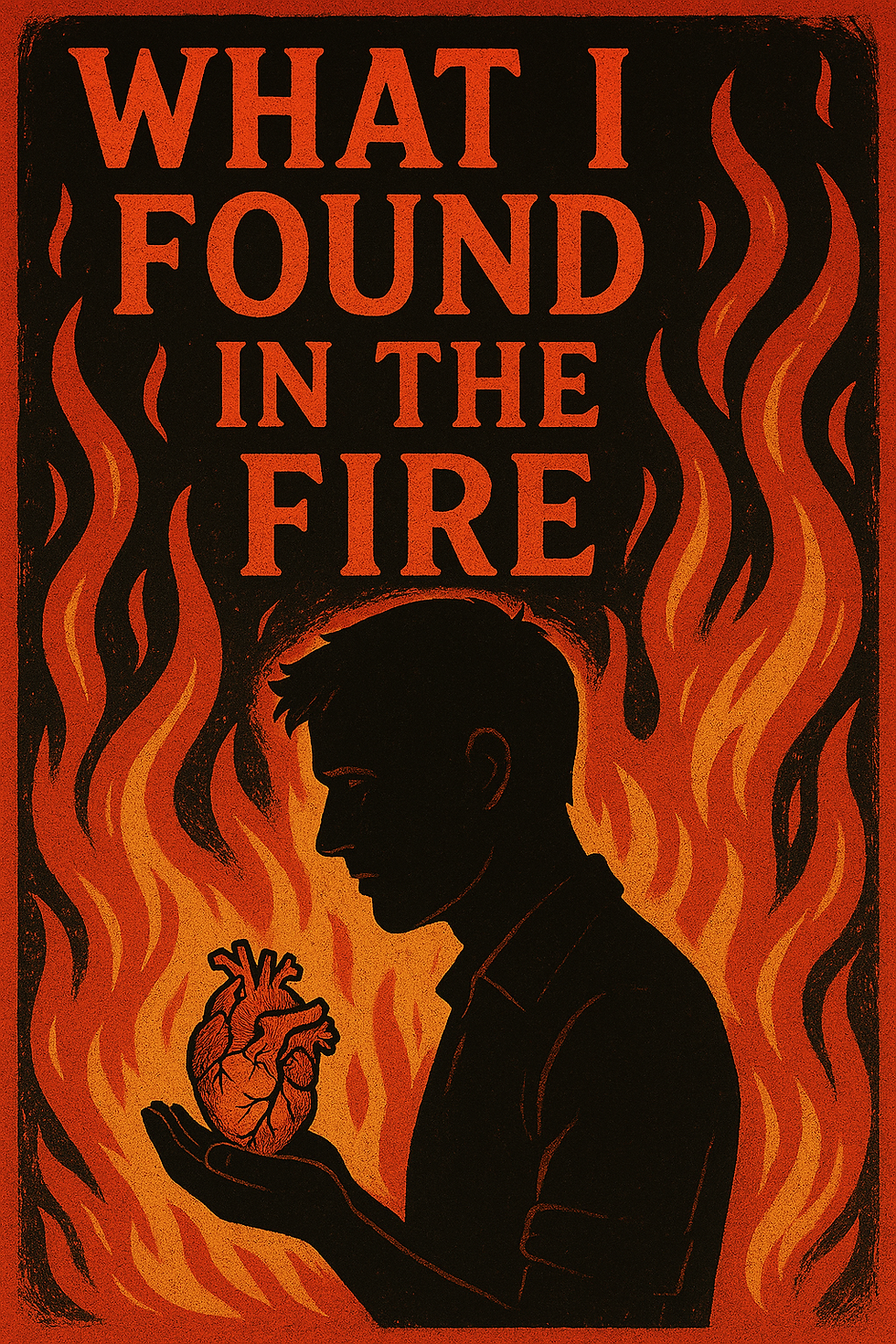
I didn’t go back to Fort Mac expecting a leadership lesson. But I got one anyway. Because the whole trip became a real-world application of the leadership model I’ve been developing:
Energy. Mentorship. Visibility. Purpose.
🔥 Energy – The Courage to Show Up Anyway

I could’ve stayed home. Could’ve buried it. Could’ve kept smiling and told myself the past didn’t matter anymore. But I didn’t. Because real energy isn’t about hype—it’s about momentum born from courage. And sometimes, the bravest thing we do is keep walking toward the places we’d rather forget.
Returning to Fort McMurray wasn’t driven by nostalgia. It wasn’t about curiosity. It was about accountability—to myself, to my story, and to the people I now lead. It was a conscious decision to step into discomfort and not flinch.
Too often, leadership energy is mistaken for charisma, volume, or relentless positivity. But real leadership energy is something quieter—and much harder. It’s the discipline to act decisively when your heart is pounding, when your past is screaming, when everything in you wants to turn back.
This trip showed me that the greatest source of fuel for meaningful leadership doesn’t come from escaping pain—it comes from engaging with it. That’s where the fire is. That’s where transformation begins.
🤝 Mentorship – Scars Speak Louder Than Speeches

You can’t fake empathy. You can’t guide someone through pain if you’ve never faced your own. People don’t need perfect leaders—they need honest ones. And this trip reminded me that the most powerful mentorship doesn’t come from the head—it comes from the heart.
Returning to these formative places showed me that true mentorship isn’t about theory, credentials, or curated wisdom. It’s about lived experience—the kind that leaves scars and teaches you how to walk again. For me, that means showing up for young professionals, Nobles, and community leaders not as someone with all the answers, but as someone who’s been through the fire and chose to come out stronger.
Authentic connection comes from the courage to reveal where you’ve struggled, not just where you’ve succeeded. Understanding my own developmental arc—my trauma, my resilience, my healing—has deepened my ability to support others who are navigating uncertainty, identity, and purpose.
Leadership built on transparency isn’t a weakness—it’s a superpower.
When we lead from our wounds, not just our résumés, we offer others something real: the permission to grow, even when it hurts.
👀 Visibility – The Power of Telling the Truth

I didn’t have to share this. I could’ve kept it quiet, tucked it away, and moved on. But I didn’t—because leadership isn’t about being seen at your strongest. It’s about being seen at your most real. That’s where trust is built. Not through perfection, but through presence.
Visibility is so often mistaken for branding, spotlight, or performance. But real visibility—the kind that transforms people and culture—requires vulnerability. It means choosing to be seen when it’s uncomfortable, when the story is still raw, when the outcome isn’t tied up in a bow.
This trip wasn’t about image. It was about integrity.
By telling the story—not just the facts, but the feelings—I wasn’t asking for sympathy. I was modeling what it means to lead with authenticity. To be accountable not just for what I do, but for who I am.
Because when we share the stories we once hid from, we give others permission to stop hiding too.
This return to Fort McMurray wasn’t just a personal reckoning. It was a declaration: that our past doesn’t disqualify us from leadership—it deepens it. That visibility rooted in truth doesn’t weaken our influence—it magnifies it.
🎯 Purpose – Transforming Pain Into Platform

This trip wasn’t about revisiting trauma. It was about reclaiming it. About standing in the very places that once broke me—and choosing to see them as the places that built me. It was about transforming pain into perspective, silence into story, and scars into signposts for others who are still finding their way.
Because purpose doesn’t come from perfection—it comes from surviving, reflecting, and rising.
The final and most defining pillar of EMVP—Purpose—revealed itself in every step of this journey. I didn’t return to Fort McMurray to relive the past. I returned to integrate it—to claim every chapter of my story as part of the leader I am today.
This trip reaffirmed something I now know deep in my bones: my purpose is to help others find strength in the very places they’ve been told to hide. To turn lived experience into leadership. To be a reminder that broken beginnings don’t have to define the whole story—they can refine it.
It also deepened my commitment to the mission of the Shriners and the Masonic family—organizations built on healing, belonging, and making the invisible visible. Because the work we do isn’t just ceremonial—it’s transformational.
Purpose isn’t found in the spotlight. It’s found in the shadows we’re brave enough to walk through.
And I’m still walking.
🧠 Final Thought: Leadership Isn’t a Title—It’s a Decision

I didn’t expect to be writing this. But I had to. Because this story isn’t just about my past—it’s about how I lead now. It’s about how I love, how I mentor, how I show up in every room I enter.
Still standing. Still healing. Still showing up.
Thanks for reading, brother. You’ve always known the polished version. Now you know the fire it came from.
— Trevor Eliott | Mr. Fancy Fez
💬 Let’s Talk.
If this story stirred something in you—about your past, your leadership, or your sense of purpose—drop a comment or send me a message. I’d genuinely love to hear your story, too.
Because the truth is, we’re all walking through something. And sometimes, the only way forward...is through the fire. 🔥


Comments