Reviving the Heartbeat: Tradition, Innovation, and the Kodak Paradox
- trevor3861
- Apr 18, 2025
- 5 min read
Written By Noble Trevor Eliott aka Mr. Fancy Fez, Assistant Rabban, Al Shamal Shriners

When Innovation Meets Inertia
In 1975, a young engineer at Kodak named Steven Sasson created the first digital camera. He proudly presented the invention to Kodak executives, expecting excitement about the revolutionary possibilities. Instead, he was met with polite dismissal. The reason? Digital photography didn’t fit Kodak’s successful business model. It threatened film sales, development labs, and printing services. Kodak, the industry giant that dominated 20th-century photography, chose to suppress its own invention. Less than three decades later, Kodak declared bankruptcy, overtaken by digital competitors who embraced the very technology Kodak had sidelined.
This paradox—where an organization undermines its own innovation to protect legacy systems—is not unique to Kodak. It plays out across industries, institutions, and yes, even within Freemasonry and its appendant bodies such as the Shriners.
Freemasonry is one of the world’s oldest fraternal organizations, built on timeless principles of brotherhood, morality, and personal transformation. And the Shriners, emerging from Masonic roots, are one of the world’s most impactful philanthropic fraternal orders. But like Kodak, both are not immune to the dangers of organizational inertia, fear of change, and reluctance to adapt. In many jurisdictions, Freemasonry and Shrine temples are facing declining membership, diminished visibility, and disengagement from younger generations. The traditions remain sacred, but the tools and structures for sharing them often seem stuck in the past.
If we are to revive the heartbeat of Freemasonry and the Shrine, we must confront the same choice Kodak once faced: protect what is comfortable, or courageously adapt while preserving our core values.

The Kodak Paradox and the Craft and Shrine
Kodak didn’t fail because it lacked innovation. It failed because it didn’t embrace innovation. The company had all the pieces to lead the digital revolution but chose to maintain the status quo.
The same dynamic exists in many Masonic lodges and Shrine temples today. These organizations have no shortage of good ideas or visionary members. The problem is often structural:
New members propose modern marketing techniques, only to be told, “That’s not how we do things.”
Younger Masons or Shriners suggest using social media or digital tools to connect, only to be met with concern about privacy or tradition.
Proposals to make education or outreach more accessible through apps, podcasts, or video conferencing are delayed or dismissed outright.
This isn’t about abandoning tradition. It’s about using innovation in service of tradition. Kodak failed because it saw digital photography as a threat to its identity. Freemasonry and the Shrine risk a similar fate when they treat new methods of engagement as threats instead of opportunities.

Understanding Resistance to Change
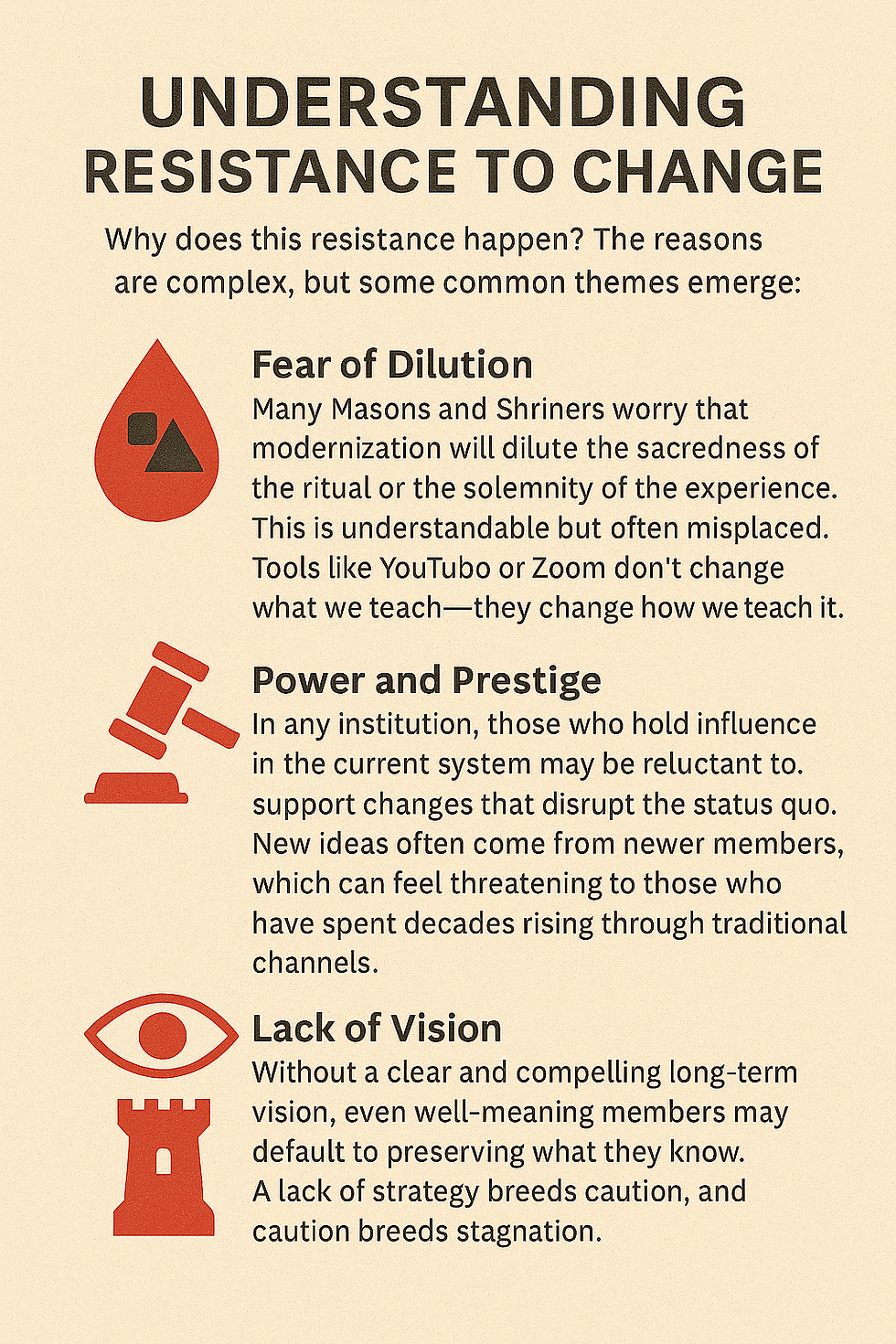
Why does this resistance happen? The reasons are complex, but some common themes emerge:
Fear of Dilution: Many Masons and Shriners worry that modernization will dilute the sacredness of the ritual or the solemnity of the experience. This is understandable but often misplaced. Tools like YouTube or Zoom don’t change what we teach—they change how we teach it.
Power and Prestige: In any institution, those who hold influence in the current system may be reluctant to support changes that disrupt the status quo. New ideas often come from newer members, which can feel threatening to those who have spent decades rising through traditional channels.
Lack of Vision: Without a clear and compelling long-term vision, even well-meaning members may default to preserving what they know. A lack of strategy breeds caution, and caution breeds stagnation.
Cultural Inertia: The phrase “we’ve always done it this way” may be comforting, but it is also dangerous. Culture can be a fortress or a prison, depending on how it is used.
Reviving the Heartbeat
The EMVP framework—Energy, Mentorship, Visibility, and Purpose—offers a model for renewal within Freemasonry and the Shrine. It invites us to ask: How can we modernize without compromising our essence?
Energy
Innovation starts with enthusiasm. We must invite younger members to share ideas, try new formats, and energize our events and engagement.
Lodges and temples that experiment with new event formats, community partnerships, and digital outreach often see immediate engagement increases.
Mentorship
Just as Sasson needed a sponsor at Kodak to elevate his idea, new members need mentors who will advocate for innovation.
Reverse mentorship is also vital—older members can learn from younger ones about technology and trends while passing down wisdom and value.
Visibility
If people don’t know what we do, they won’t join.
Leverage social media, podcasts, public events, and partnerships to make our work visible again. Tell the story in new ways.
Share the values and community impact of the Craft and Shrine, not just the regalia or fez.
Purpose
Ritual is beautiful, but its purpose must be relevant. Help members connect the teachings to modern life.
Host events around mental health, leadership, mentorship, and community service. Connect our organizations to causes that matter today.

Case Studies of Innovation in Freemasonry and the Shrine
Digital Lodges and Hybrid Shrine Clubs
During COVID-19, some jurisdictions adapted quickly to hybrid and virtual meetings. Rather than diminish the experience, these changes kept the brotherhood alive.
Online education sessions, Shrine club planning meetings, and digital fundraisers increased access and visibility.
Podcasts, YouTube, and Public Education
Shows like Whence Came You?, The Masonic Roundtable, and Shrine-focused videos have introduced thousands to our work.
These platforms introduce new audiences, spark interest, and support ongoing learning and outreach.
Community Visibility Campaigns
Shrine clubs hosting car shows, sports team nights, or circus events gain traction when promoted through digital campaigns and public partnerships.
One Shrine temple revitalized interest with strong social media branding, temple tours, and consistent storytelling—and saw a measurable boost in attendance.
Mentorship and Legacy Building
Mentorship models from lodges are being adopted by progressive Shrine temples to guide new nobles and ensure purpose-driven engagement.
Structured onboarding that ties Masonic values to Shrine philanthropy helps build deeper, longer-lasting connections.
Building a Culture of Courageous Leadership

Kodak didn’t lack intelligence—it lacked courage. The same is true for Freemasonry and the Shrine today. The path forward requires:
Courageous Worshipful Masters and Potentates willing to try new formats, invest in digital tools, and empower new leaders.
Supportive Grand Lodges and Shrine Boards that enable innovation without stifling red tape.
Engaged Brethren and Nobles who offer ideas, show up, and lead by example.
We must move from gatekeeping to pathmaking. From saying “no” to asking “what if?” From preserving ritual and philanthropy as relics to empowering them as roadmaps.
Our Moment of Choice
Just like Kodak, our Craft and our Shrine temples are at a crossroads. We can cling to a model that worked in the 1950s and fade into irrelevance. Or we can courageously adapt, using new tools to share timeless truths and expand our philanthropic reach.
Reviving the heartbeat is not about fixing what's broken. It's about rekindling what's been buried under layers of "we've always done it this way."
Let us not fear the digital camera. Let us use it to illuminate the faces of Brotherhood and Compassion. Let us not shun the curious seeker or eager volunteer. Let us welcome them with open arms and open minds. Let us not wait for decline to overtake us. Let us choose, now, to revive the heartbeat.

The future of Freemasonry and the Shrine will not be written by those who guard the past. It will be built by those who are brave enough to reimagine it.


Comments