Cookies, Camaraderie, and Caring: The Legacy of Illustrious Sir Robert M. Lee
- trevor3861
- Jun 9, 2025
- 10 min read
Updated: Jun 10, 2025
By Trevor Eliott / Interview conducted May 22, 2025
In a time when fraternal organizations are searching for fresh energy and relevance, the life of one Shriner reminds us that the answers may not lie in digital strategies or strategic plans—but in cookies, camaraderie, and fierce purpose.

Illustrious Sir Robert M. Lee proudly displays a ring-necked pheasant during the legendary Moslem Shrine pheasant hunt in South Dakota—proof that camaraderie, laughter, and a good aim are just as important as ceremony and ritual in building brotherhood.
On a warm May morning aboard a tour bus navigating Mexico City’s winding roads, I had the privilege of sitting beside Illustrious Sir Robert M. Lee. A Past Potentate of Moslem Shrine (2011), former Chairman of the Shriners Hospital for Children Board of Governors in Erie, PA (2015–16), and lifelong advocate for “having fun and helping kids,” Bob’s story is equal parts adventure, mentorship, and mission.

Ill. Sir Bob Lee of Moslem Shrine and Noble Trevor Eliott of Al Shamal share a moment at Shriners Children’s Mexico—proof that no matter the distance, Shriners speak the same language: laughter, compassion, and a whole lot of fez flair.
As the streets blurred past our window, his memories poured out in a rich, unfiltered stream—decades of experiences, laughs, lessons, and leadership. Through it all, Bob’s story exemplifies the EMVP framework: Energy, Mentorship, Visibility, and Purpose—a model I use to describe how vibrant leaders keep our fraternity alive and impactful.
A Serendipitous Start: Golf, Family, and the Call to Shrine
Bob’s path into Shrinedom wasn’t through a lodge meeting or Masonic degree—it started on the greens.

“I was a golf club member at a course in Greenville, South Carolina,” he recalled. “Then it was bought by Hejaz Shrine.”
He wasn’t yet a Mason. Joining the Shrine meant becoming the third generation in his family to do so. The ring he now wears is a family heirloom: his grandfather’s stone, reset by his father, and proudly passed to him.
“I told my Dad I was joining the Shriners. He was surprised—but proud.”
The 1981 ceremonial in Columbia, SC, hosted by three temples, included an electrified “hot square” obstacle course.

“There were like 300 of us running around in our underwear,” Bob laughed. “It was pure Hot Sands madness.”
Inspired by his son’s journey, Bob’s father, Delo, joined Yelduz Shriners in Aberdeen, South Dakota.
Cookies and Campaigns: Building a Brand Through Brotherhood
When Bob campaigned for Oriental Guide in 2006, he began baking cookies.
“I brought 55 cookies to every club—124 batches, 6,820 cookies in all.”

While he joked about the vote-to-cookie ratio, the treats became part of his brand. When he became Potentate in 2011, his theme—“Another Lucky Year for Our Shrine Kids”—featured a fez-wearing Cookie Monster (with legal permission from Sesame Street) on shirts, pins, and 10,000 custom souvenir cups.

It was lighthearted, yes—but also strategic. It created warmth, welcome, and instant visibility.
Brotherhood on the Prairie: The Famous Pheasant Hunt

“I took 20 guys from Detroit to South Dakota. We hunted, ate, and built brotherhood.”
The lodge-style trip included Dakota Hash, bunkhouse living, and good-natured storytelling. Later, Bob organized a national parks bus tour for 50 Nobles and their ladies.
“Our bus driver had so much fun he joined Moslem Shrine.”
This wasn’t just social—it was recruitment, retention, and culture-building in disguise.
Fighting for What Matters: The Hospital Cafeteria Battle

As Vice-Chairman of the SHC-Erie Board of Governors, Bob fought to save the hospital cafeteria, scheduled for closure due to a $70,000 cut. That meant lost meals for Shrine drivers and families—and the hospital dietitian’s job.
“That wasn’t just food. That was a place for drivers, kids, and families to find comfort. Some people drove four hours from Detroit. We couldn’t expect them to fend for themselves.”
Bob acted quickly, got permission from national leadership, and made a passionate presentation to the Joint Boards. They reversed the decision.
Though the cafeteria eventually closed years later, Bob gave it a reprieve and proved how purpose-driven advocacy matters.
EMVP in Action: Bob’s Legacy as a Living Framework

⚡️ Energy – The Spark That Starts It All

In every strong organization, there’s someone whose presence ignites a room—whose mere arrival says, “Something good is about to happen.” For Moslem Shrine, that person was Ill. Sir Bob Lee.
Bob didn’t wait for perfect conditions. He didn’t wait for permission. He brought the Shrine to life by showing up with purpose and joy, again and again. Whether he was rolling up to a club meeting with a fresh batch of cookies, packing pheasant hunters onto a Shrine bus headed west, or walking into a hospital boardroom prepared to battle for what mattered—Bob didn’t coast. He generated momentum.
His energy wasn’t loud or flashy—it was relentless. He believed that laughter could lead to leadership, and that Shrinedom should be felt, not just explained. That’s why his campaign wasn’t just a pitch—it was an experience. With every Cookie Monster cup handed out, he wasn’t just offering a snack—he was creating a story that people wanted to retell.
“You don’t inspire people by title,” Bob said.“You inspire them by showing up with enthusiasm.”
Energy, for Bob, wasn’t about hype—it was about consistency. He didn’t just bring cookies to get elected; he kept bringing energy long after the votes were counted. He showed up at events, led by example, and infused his Nobles with the belief that fun and function weren’t opposites—they were partners.
From Hot Sands initiations to hospital visits, his spark was unmistakable—and contagious. Others didn’t just follow him because he was Potentate. They followed him because he made them feel that their time, laughter, and presence mattered.
In an era where many leaders wait to be inspired, Bob was the inspiration.Not because he tried to be—but because he showed up like it mattered.
🤝 Mentorship – The Quiet Strength of Example

Bob didn’t teach mentorship. He was mentorship.
He didn’t run orientation sessions or develop PowerPoints about member engagement. He threw open the bus door and said, “Hop in.” Whether it was a ceremonial, a hunting trip, or a hospital visit—Bob brought people with him. Not to lecture. Not to impress. But to let them feel what it means to be a Shriner.
“I brought people with me—not to impress them, but to include them.”
That inclusion was the mentorship. It was in the way he greeted new Nobles like old friends. It was in the casual wisdom he shared between laughs. It was in the stories he told that weren’t sanitized or polished, but real—full of mistakes, lessons, and humor.
He modeled that Shrine leadership isn’t about hierarchy—it’s about hospitality.
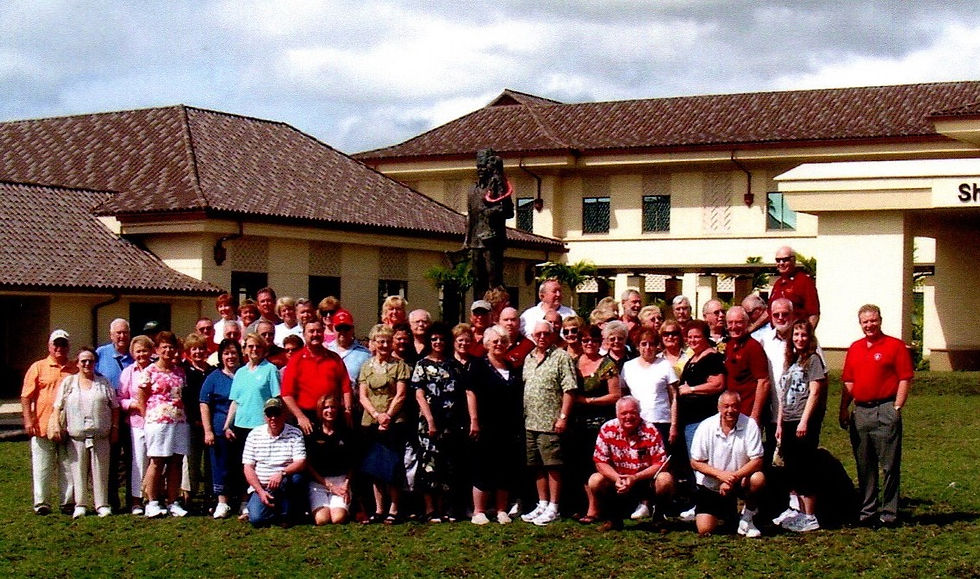
At events, Bob made a point to introduce people across generations, across regions. He’d remember where you were from and follow up later. He helped new Nobles not just understand the Shrine, but find their place in it.

One Moslem Noble told me:
“He was the guy who’d help you get your fez straight—and your priorities straighter.”
Bob believed that mentorship wasn’t a job. It was a way of being. A way of living in alignment with the mission, and inviting others along for the ride—literally and figuratively.
In an era where many worry about retention and relevance, Bob shows us something timeless: people don’t follow a title—they follow someone who cares enough to take them along.
👁 Visibility – Making the Shrine Seen and Felt

Bob Lee didn’t wait for someone else to tell the Shrine story—he made it impossible to miss.
From Cookie Monster cups stacked in hospitality rooms to matching Moslem Shrine shirts worn with pride, he turned everyday gatherings into high-visibility statements. His version of marketing wasn’t digital—it was delightful. It wasn’t branded content—it was living content.
“Parades weren’t just events. They were moments. You didn’t just see us—you felt us.”
At every step, Bob understood that visibility isn’t about flash. It’s about connection. It’s about making the public smile, making new Nobles proud to belong, and reminding every onlooker that Shriners are here—and we matter.
And when it came to leaving an impression, he had a secret weapon:
“Moslem on the move—say OOH-AAH!”
That chant became a signature at events. A rally cry. A memory maker. For many, it wasn’t just the Shrine they saw that day—it was Bob’s joy echoing through the crowd.
Visibility, in Bob’s hands, wasn’t a strategy. It was a feeling.And it’s a feeling we’re still talking about today.
🎯 Purpose – Staying Anchored in the Mission

For Ill. Sir Bob Lee, purpose was never just a word—it was a direction. And his compass always pointed to the kids.
From the very first day he became a Shriner in Greenville, South Carolina, Bob was introduced to the mission not through a pamphlet or PowerPoint, but through a hospital tour. That walk through Shriners Children’s Greenville grounded him in what really mattered—and he never let go of it.
Decades later, as Chairman of the Board at Shriners Children’s Erie, he found himself defending something as “ordinary” as a hospital cafeteria. But to Bob, it was never just about food or budget line items. It was about the circle of care—the unspoken bond between patients, their families, the hospital staff, and the Shriners who drive the mission forward, often literally.
“You don’t pull away the comfort of a meal after someone’s driven four hours. You serve them, because that’s what we do.”
That cafeteria represented more than meals. It was where anxious parents found a quiet moment. Where drivers shared a coffee after a long road trip. Where hospital staff could grab a breath between caring for kids. It was, in many ways, a daily expression of Shrine compassion—humble, consistent, vital.
Bob wasn’t afraid to challenge leadership when they lost sight of that. He didn’t pick fights for ego; he stood his ground for the mission. His purpose wasn't just stated—it was demonstrated.
“Bob’s decisions always pointed north—to the kids. That’s the kind of purpose we need.”
In a time when organizations are tempted to chase metrics, optics, or efficiency, Bob reminds us that real purpose is found in serving people with dignity, loyalty, and heart.
He didn’t just preserve the Shrine’s mission—he protected it.
And in doing so, he gave all of us a roadmap for what true purpose looks like: quiet, consistent, courageous, and always centered on the children we serve.
Why Bob Lee’s Legacy Matters Now
Temples today are grappling with falling numbers and fading energy. The question of “what’s next?” is haunting many Divans.
Bob’s legacy answers that.
He didn’t grow the Shrine with bylaws. He grew it with cookies, cards, and cross-country road trips.

He didn’t hold visioning retreats. He built a vision by living it.
He made retention personal. He made recruitment relational. He built moments that turned into memories.

He is what fraternal leaders today must aspire to be: approachable, mission-driven, and joyfully present.
A More Actionable Future: Lessons from Bob

We don’t need more rules.We need more Nobles like Bob Lee.
Host something small but meaningful.
Tell your story at your next meeting.
Bring someone along—literally—on a Shrine trip.
Bake the cookies. Wear the fez. Be the reason someone stays.
Conclusion: “Moslem on the Move” Means All of Us

Bob Lee didn’t preserve the Shrine—he projected it into people’s lives with warmth and sincerity.
His legacy is a story of bus rides, Cookie Monster cups, cafeteria battles, and South Dakota sunrises.

It’s a story we should carry forward—not just in memory, but in action.
Now, it’s our turn to lead with:Energy. Mentorship. Visibility. Purpose.
Now, it’s our turn to say:
“It’s great to be a Moslem Shriner - OOH-AAH!”


Comments