Fifty Years at the Altar: What Rick Beaumont's Journey Teaches Us About the Heartbeat of Freemasonry

There are some evenings in lodge that stay with you long after the minutes have been approved, the regalia has been put away, and the lights have been turned off.
The June 3, 2026 meeting at Avon Glen Lodge shared structure much like any other. The lodge was opened in due form. Visitors were welcomed and introduced. Reports were shared. Upcoming events were discussed. Brothers exchanged handshakes, stories, and the familiar banter that fills the room before a meeting begins. On the surface, it looked like a typical evening in Freemasonry.
Yet everyone present knew that something special was about to happen.
The purpose of the gathering extended beyond the regular business of the lodge. We had come together to celebrate a remarkable milestone in the life of Brother Rick Beaumont, who was receiving recognition for fifty years of service to Freemasonry.
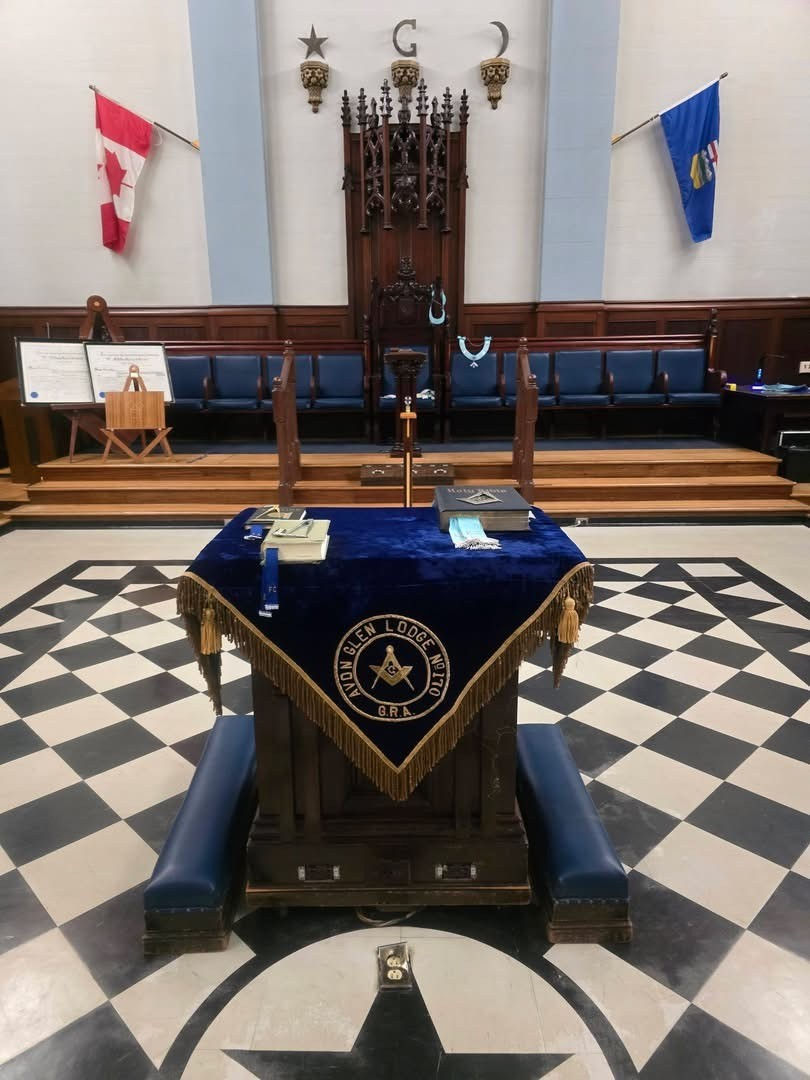
As I watched Rick approach the altar, I found myself thinking about the significance of that moment. Fifty years earlier, he had stood before an altar much like this one as a young man beginning his Masonic journey. He could not possibly have known where that journey would lead. He could not have known the friendships he would form, the lessons he would learn, the experiences he would share, or the impact he would have on countless brethren along the way.
Now, half a century later, he stood before the altar once again, not as a new Mason filled with questions, but as a respected brother whose life had become part of the living history of the Craft.
That image lingered with me throughout the evening because it captured something essential about Freemasonry. We often think of our fraternity in terms of meetings, degrees, officers, committees, and events. Those things certainly matter, but they are not the heart of Masonry.
The heart of Masonry is the journey itself. It is the gradual shaping of character, the accumulation of relationships, and the quiet influence of men who spend years, and sometimes decades, investing in one another.
Rick's recognition was not simply a celebration of longevity. It was a reminder of what becomes possible when a man remains connected to the fraternity over the course of a lifetime.
Standing Before the Same Altar
One of the most meaningful aspects of the ceremony was the symbolism of returning to the altar. The altar occupies a unique place within Freemasonry. It is where obligations are taken, where promises are made, and where men begin a journey that they hope will influence every aspect of their lives.
When a man first kneels at the altar, he often focuses on the immediate experience. He is learning ritual, meeting new people, and trying to understand the traditions that surround him. The future feels distant. Fifty years seems almost unimaginable.
Yet time has a way of moving more quickly than we expect.
The young man eventually becomes a Master Mason. The Master Mason becomes a mentor. The mentor becomes a Past Master. The years accumulate through meetings attended, meals shared, friendships formed, and countless moments that may seem ordinary at the time but ultimately become the fabric of a meaningful life.
Standing before the altar after fifty years creates a powerful contrast between who we were and who we have become. It invites us to reflect not only on what we have accomplished, but on how we have grown. It asks us whether we have remained faithful to the principles we once promised to uphold.
For Rick, the answer was evident in the respect shown by the brethren present. The room was filled with men who had travelled from other lodges, many of whom had known him for years. Some had served alongside him. Others had learned from him. Their presence spoke volumes about the relationships he had built throughout his Masonic journey.
In many ways, the ceremony was less about recognizing an individual and more about celebrating the community that had grown around him.
Energy Is Not Just for New Members
When people hear the word "energy," they often think of youth. They picture new candidates, enthusiastic officers, and ambitious plans for the future. While those forms of energy are important, the evening challenged me to think about energy differently.
The energy that sustains a lodge over decades is not the same as the excitement that brings someone through the door for the first time.
New members are energized by curiosity. They want to learn. They want to experience the degrees. They want to discover what Freemasonry is all about.
Long-serving members are often energized by something deeper. Their motivation comes from relationships, service, and a sense of belonging. They continue showing up not because everything is new, but because they have discovered meaning in the journey.
Listening to Rick share stories from his life illustrated this perfectly. He spoke about being initiated in Quebec in 1976. He recalled his career as a land surveyor and his move to Alberta. He reflected on joining local lodges, participating in events, travelling, golfing, and building friendships with men who would become lifelong companions.
None of those experiences happened overnight. They were accumulated over years of participation.
This is an important lesson for every lodge. Sustaining energy requires more than creating exciting programs. It requires creating an environment where members continually find reasons to remain engaged. People need opportunities to contribute, to learn, to serve, and to connect with others in meaningful ways.
A lodge that focuses only on attracting new members may generate short-term enthusiasm. A lodge that invests in the long-term experience of its members creates lasting vitality.
The difference is significant. One creates activity. The other creates culture.
Mentorship Without a Formal Program

One of the most powerful moments of the evening came during Rick's remarks. He offered advice to younger Masons, encouraging them to visit lodges, get involved, go through the chairs, and embrace the opportunities available to them.
His message was simple, but it carried weight because it was grounded in experience rather than theory.
Too often, when we discuss mentorship, we immediately think about formal programs. We create committees, assign mentors, and develop structured processes. While those efforts have value, they sometimes cause us to overlook the most powerful form of mentorship: relationships.
The lessons that shape us most deeply are rarely delivered in a classroom setting.
They emerge during conversations after lodge.
They happen during road trips to visit another jurisdiction.
They occur while setting up tables before an event or cleaning up afterward.
They are shared during golf tournaments, festive boards, and late-night conversations over coffee.
Mentorship in Freemasonry often looks less like instruction and more like companionship.
Rick's own journey reflected this reality. Throughout the evening, names surfaced repeatedly. Friends. Mentors. Brothers. Men who had influenced his path and helped shape his experience. Each relationship represented a small investment that, over time, contributed to the person he became.
This is one of the reasons mentorship is such a critical pillar within the EMVP framework. Organizations survive because knowledge is transferred. They thrive because wisdom is transferred.
Knowledge can be written down.
Wisdom must be lived.
That transfer happens when generations interact with one another in meaningful ways.
The Visibility of Legacy

In recent years, many lodges have worked hard to increase public visibility. We invest in social media, community events, charitable activities, and public relations efforts. These initiatives are important because they help people understand who we are and what we do.
Yet the evening reminded me that there is another kind of visibility that deserves equal attention.
There is tremendous value in making our internal stories visible.
Many of the contributions that sustain a lodge happen quietly. Brothers volunteer behind the scenes. They mentor newer members. They attend meetings consistently. They support events. They help maintain traditions. Much of this work goes unnoticed because it becomes part of the normal rhythm of lodge life.
Recognition ceremonies bring those contributions into the light.
When a lodge celebrates fifty years of membership, it is doing more than presenting an award. It is communicating values. It is telling every newer member in the room what the organization considers important.
Organizations teach culture through what they celebrate.
If we celebrate service, people learn that service matters.
If we celebrate mentorship, people learn that mentorship matters.
If we celebrate friendship, commitment, and contribution, those values become part of the organizational identity.
The younger brethren present on June 3 witnessed something important. They saw what a lifetime of Masonic engagement can look like. They saw that the fraternity values more than attendance. It values commitment, relationships, and sustained contribution.
That kind of visibility shapes expectations for future generations.
Purpose That Evolves Over Time
Another aspect of Rick's remarks that stood out was how naturally he connected Freemasonry with service beyond the lodge. He spoke about the Shriners, the hospitals, and the opportunities available to brethren who wish to continue their journey through other Masonic bodies.
What struck me was not the organizations themselves. It was the way his sense of purpose had evolved over time.
The purpose that first attracts someone to Freemasonry is rarely the same purpose that keeps them engaged decades later.
Some men join seeking friendship.
Others join seeking self-improvement.
Some are looking for tradition.
Others are searching for meaning.
Over time, however, many discover that the greatest rewards come through service.
The focus shifts from what we receive to what we can contribute.
This evolution is critical for the long-term health of any organization. Members who remain focused solely on personal benefits often become disengaged when those benefits diminish.
Members who discover opportunities to serve tend to remain connected because their involvement becomes tied to something larger than themselves.
Purpose provides resilience.
It gives people a reason to continue showing up even when life becomes busy or challenging.
It transforms participation from an activity into a calling.
Rick's journey reflected that evolution. The stories he shared were not primarily about titles or achievements. They were about people, experiences, friendships, and opportunities to make a difference.
That is what enduring purpose looks like.
What Healthy Lodges Understand
As I reflected on the evening, I realized that the strongest lodges understand something that is easy to overlook.
They are not simply managing meetings.
They are stewarding journeys.
Every member arrives at a different stage of life. Some are young men beginning careers. Some are raising families. Some are navigating retirement. Others are searching for community after significant life changes.
Each brings unique needs, experiences, and expectations.
The lodge's responsibility extends beyond initiating candidates. It involves creating an environment where members can continue growing throughout every stage of life.
That growth happens through the interaction of all four EMVP pillars.
Energy creates engagement.
Mentorship creates development.
Visibility creates culture.
Purpose creates meaning.
When these elements work together, members remain connected not for months or years, but for decades.
Rick Beaumont's fifty-year recognition was evidence of that process in action. It represented the outcome of countless interactions, relationships, and experiences that had accumulated over half a century.
The ceremony itself lasted less than an hour.
The journey behind it took fifty years.
Looking Toward the Next Fifty Years
It is tempting to view milestone recognitions as celebrations of the past.
In reality, they are also conversations about the future.
Every younger Mason in the room was presented with an implicit question.
What kind of journey are you building?
The answer will not be determined by a single meeting, event, or office. It will be shaped by small decisions made repeatedly over time.
Will you visit another lodge?
Will you mentor a newer member?
Will you volunteer for a committee?
Will you support a brother who is struggling?
Will you remain engaged when circumstances make participation difficult?
The future of Freemasonry is not determined by grand strategies alone. It is built through thousands of individual choices made by ordinary members.
Fifty years from now, another brother will stand before an altar to receive recognition for his service. The question is whether today's members are creating the culture, relationships, and opportunities necessary for that future celebration to occur.
The answer depends on all of us.
Reflection Questions
What experiences in your lodge help transform new members into lifelong members?
Who were the mentors that shaped your Masonic journey, and how are you passing their lessons forward?
If your lodge celebrated a fifty-year Mason tomorrow, what values would that ceremony communicate to the next generation?
Keeping the Heartbeat Alive
As the meeting concluded, photographs were taken, stories continued, and brethren gathered around Rick to offer congratulations. There was laughter, gratitude, and the unmistakable feeling that everyone had participated in something meaningful.
The jewel will eventually find a place in a display case.
The certificate will likely be framed.
The photographs will become part of the lodge archive.
Yet those physical reminders are not the true legacy of the evening.
The real legacy is the example.
It is the reminder that Freemasonry is not built through extraordinary moments alone. It is built through ordinary acts repeated consistently over time. It grows through friendships maintained, lessons shared, service rendered, and commitments honoured year after year.
On June 3, we celebrated fifty years of membership. What we truly celebrated was fifty years of energy, mentorship, visibility, and purpose woven together into a life well lived. More importantly, we were reminded that the heartbeat of Freemasonry is not found in our buildings, our regalia, or even our traditions. It lives within the men who continue to show up, continue to serve, and continue to invest in one another.
Rick Beaumont's journey is a testament to what happens when a man spends a lifetime doing exactly that.


Hello, thanks for the article, very true.👍